
Fans of Mr. Monopoly will be familiar with the iconic cartoon character frequently featured in his artwork. What’s the story behind the iconic Monopoly man, and why is he so well-recognized? This article will explore how the Monopoly man character became such an essential part of art and pop culture.
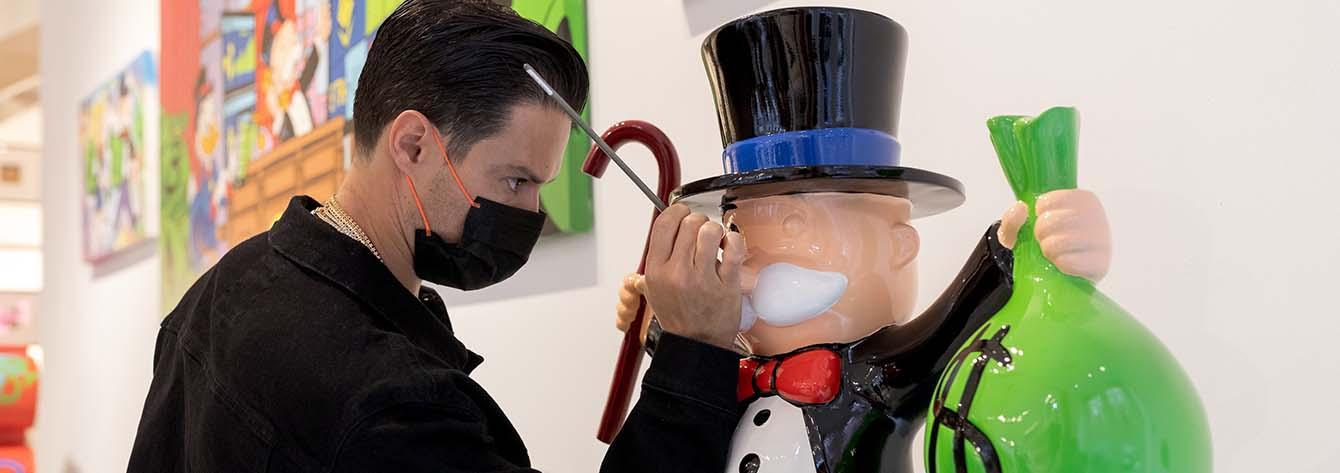
Who is the Mr. Monopoly? The Character Behind the Classic Board Game
Updated: March 17 2026
Key Takeaways: The Story Behind the Monopoly Man
The Monopoly Man—officially named Rich Uncle Pennybags—is the iconic mascot of the Monopoly board game and a widely recognized symbol of wealth and capitalism.
Although many people remember him wearing a monocle, the character has never officially been depicted with one, making it one of the most famous examples of the “Mandela Effect.”
The character was inspired by wealthy early-20th-century businessmen and has appeared across popular culture, television, and visual art.
Contemporary street artist Alec Monopoly adopted the Monopoly Man as his signature motif, using the character to comment on wealth, consumerism, and modern capitalism.
Through exhibitions and curated collections, EDEN, The House of Art presents works by artists like Alec Monopoly who reinterpret iconic cultural symbols within contemporary art.
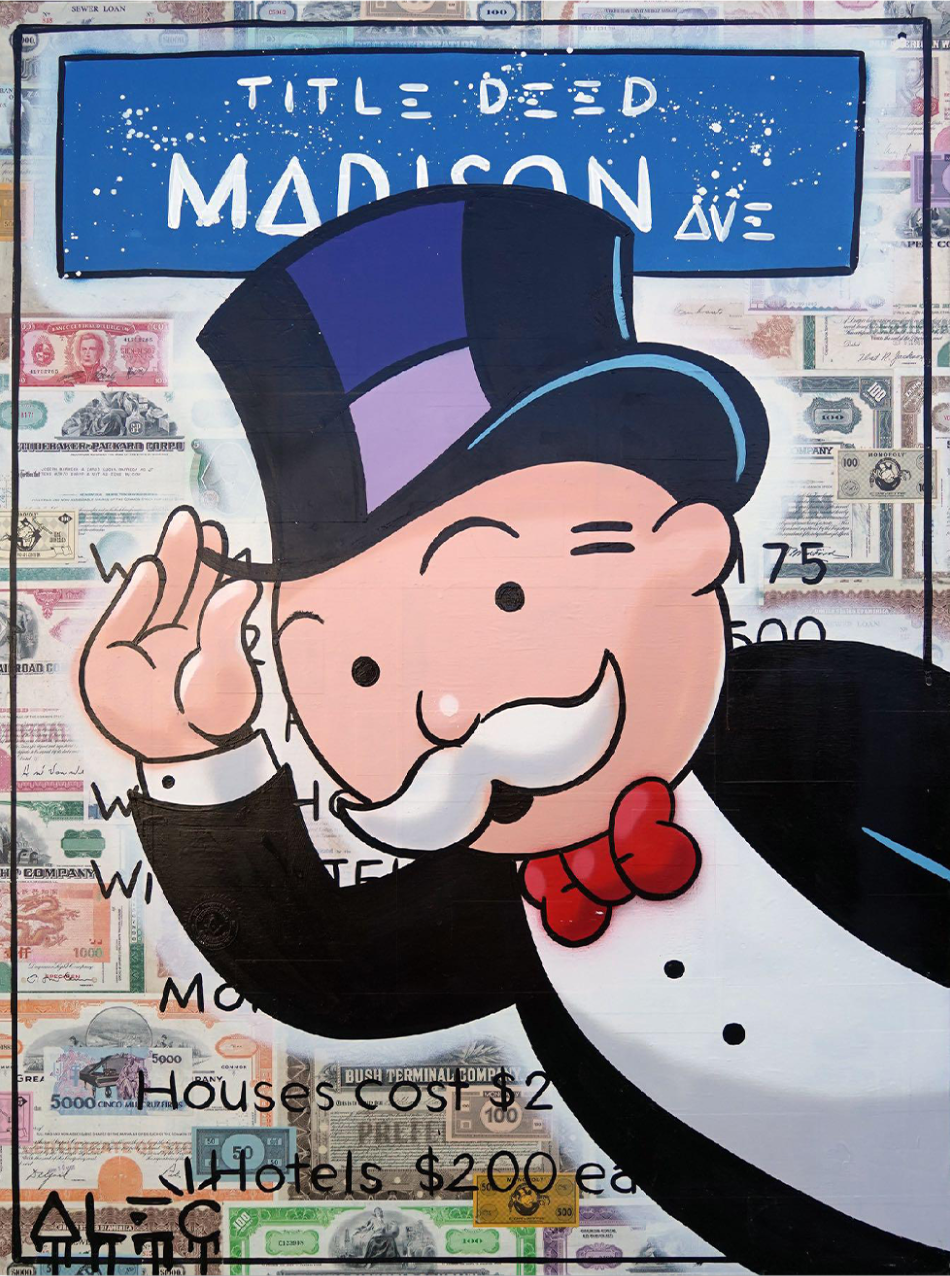
What Is the Name of the Monopoly Guy With the Monocle?
We all vaguely recognize the “monopoly man” or that “monopoly guy” – but who is he? The character comes from the Monopoly board game and is based on Rich Uncle Pennybags, reimagined as Monopoly’s mascot. Initially, his name was just Rich Uncle. The original artist of the character is unknown.

Who Is the Monopoly Man?
Rich Uncle Pennybags featured in several Parker Brothers card and board games, including Chance and Community Chest, before appearing in Monopoly. Rich Uncle Pennybags was modeled after the American Progressive Era businessman J. P. Morgan.

Although comparisons are often made to Daddy Warbucks from Annie, the popularity of the Monopoly board game and its spin-offs made Rich Uncle Pennybags widely known as the Monopoly Man.
Rich Uncle Pennybags has been depicted in popular culture as a portly older man with a mustache, wearing a morning suit, bowtie, and top hat. He has been featured in TV shows like The Simpsons and has become a symbol of extreme wealth, capitalism, and greed. Today, he is most commonly referred to as the Monopoly Man, Mr. Moneybags, or Mr. Monopoly.

Does the Monopoly Man Have a Monocle?
Fun fact: the Monopoly Man has never officially worn a monocle. Despite popular belief, no official depiction has ever shown him with eyewear.
Why Do We Think the Monopoly Man Has a Monocle?
You’re probably wondering why you think Mr. Monopoly has a monocle. It’s because of a phenomenon known as the Mandela Effect.
The Mandela Effect
The Mandela Effect is a term created to explain how some of our fondest perceived childhood memories are fallacies. Your brain tells you that one thing is true, but in reality, what we perceive as truth is completely false. This kind of misremembering can happen en masse, to large numbers of people who misremember the same thing.
Because of the Mandela Effect, our brains can be incapable of generating accurate, authentic memories. The Monopoly Man’s monocle has become one of the most common examples because it’s so widely believed that the character wore an eyeglass. However, this collective memory is inaccurate. Since its inception in 1936, the popular board game has never depicted the mustachioed banker with eyewear.
Our collective subconscious may have conflated Mr. Monopoly with another dapper character of the time, Mr. Peanut. Mr. Peanut wore a monocle, and our memory “borrowed” it and associated it with Mr. Monopoly. The dapper outfit and monocle of these conflated characters became synonymous with a stereotype of wealth and prestige.
Alec Monopoly & the Monopoly Man
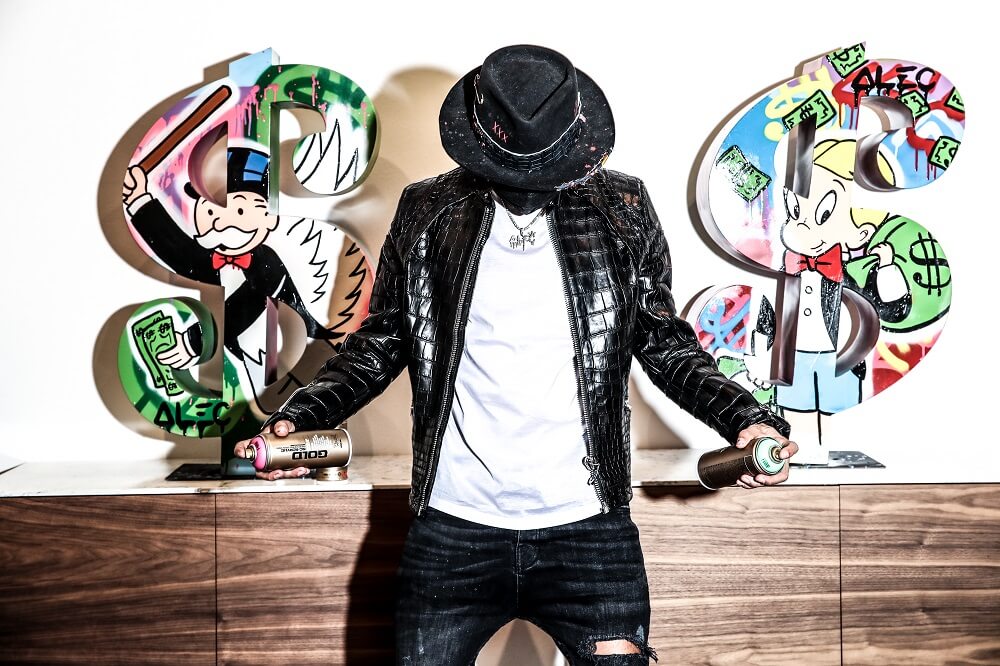
The Monopoly Man has become one of the most recognizable themes in the graffiti art of artist Alec Monopoly. Alec Monopoly (real name Alec Andon) uses Mr. Monopoly as his signature character.

He can be seen across Alec Monopoly’s street art murals, paintings, and graffiti works. The pseudonym started naturally as an attempt at hidden identity, tied to his favorite subject.
Why Does Alec Monopoly Use the Monopoly Man?
From his earliest works, he used Mr. Monopoly as a symbol for greed and excess. Alec was drawn to the ruthless capitalism of the Monopoly game, where the objective is to accumulate as much wealth as possible while pushing competitors into bankruptcy. As a teenager, Alec Andon began using the character in spray paintings around New York City.

His work continues to satirize capitalism, combining the Monopoly Man with other symbols of wealth—often including luxury fashion references like ‘Chanel Monopoly Colors’ or ‘Hermes Horse With Monopoly’.

Whether working on the streets or on canvas, the style of Alec Monopoly comments on society’s economic system. The Monopoly Man and other themes—such as Richie Rich—invite audiences to consider capitalism, consumerism, and corporate greed.
RELATED ARTICLES
EDEN
Updated: March 31, 2026Alchemy of the Ordinary: Transforming Everyday Objects into Masterpieces
Art has a remarkable ability to elevate the mundane, turning everyday objects into extraordinary expressions of creativity. Throughout history, artists have reimagined the ordinary, using it to challenge perceptions, inspire wonder, and reshape our ...

EDEN
Updated: March 25, 2026What Is Drawing?
Drawing is one of the most commonly recognized forms of visual art. Drawings are created by an artist using instruments to create lines on paper or another two-dimensional surface.
EDEN
Updated: June 03, 2026Alec Monopoly's Exhibitions
EDEN, The House of Art, presents a series of exclusive Art Nights with Alec Monopoly in Miami and New York. Showcasing his latest works, including the bold Flying to a Happy Place series, these immersive evenings bring together art, music, and atmosphere ...
Show more