
Explore Philippe Viejo’s artistic journey, where universal portraiture, memory, resilience, and layered materials come together to reflect the shared face of humanity.
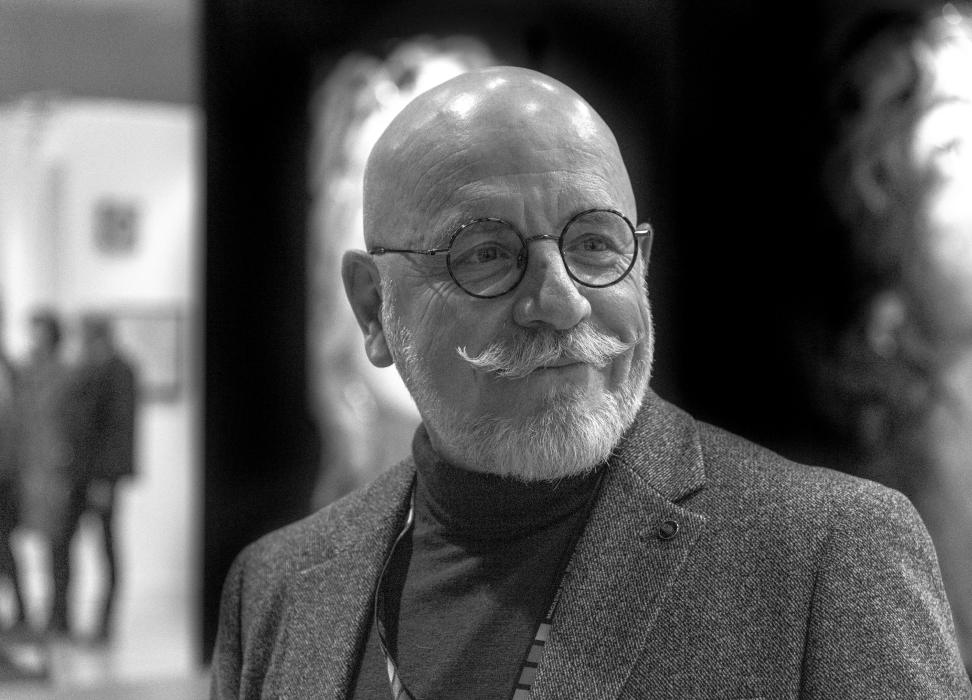
Philippe Viejo: The Universal Face of Humanity
Updated: May 04 2026
In the work of Philippe Viejo, portraiture becomes something far more expansive than representation, it becomes a space of recognition. His figures are not individuals, but vessels. They carry memory, movement, and meaning across continents, cultures, and time. Through layered materials and a deeply personal visual language, Viejo invites us to encounter not someone, but ourselves.
In this conversation with EDEN, the artist reflects on his beginnings, his philosophy, and the emotional core that defines his work.
Origins
EDEN: Where does your story as an artist begin?
Philippe Viejo: It begins in secrecy. I was a child who hid his canvases under his bed, painting in secret while my parents insisted that art “would not provide a living.” The smell of turpentine was my only betrayal. This tension between creative impulse and family prohibition shaped something essential within me: a quiet determination, an inner necessity that nothing could extinguish.
EDEN: Was there a moment when you realized art would be central to your life?
Philippe Viejo: I believe there were two. At thirteen, when Claudie Pince, my art teacher, recognized my abilities and gave me a small space at the back of her classroom, it was the first external validation. Then at seventeen, when my father and I built the Beluga, a sailboat that carried us across the Antilles, Venezuela, and the Caribbean. That journey revealed to me the richness of humanity in all its diversity.
Language & Identity
EDEN: What themes or ideas do you return to most often?
Philippe Viejo: Universal humanity. Not a particular face, but the face, one in which everyone can recognize themselves. My portraits invite projection rather than identification. Whether I name a work AGADEZ or PORTOFINO, the message remains the same: we are all human beings, carrying the same essence.
My portraits are mainly female. For me, the woman is fundamental, she carries life. Painting women’s faces is, in a way, painting the origin.
Each work also features a raised 3D totem, the “courter of horizons.” It symbolizes the desire to reach the unattainable, the beauty of pursuing what lies beyond us.
There is also reconstruction. The small houses I began drawing after the Mexico City earthquake form the literal foundation of my work. Art becomes a response to chaos, an act of resilience.
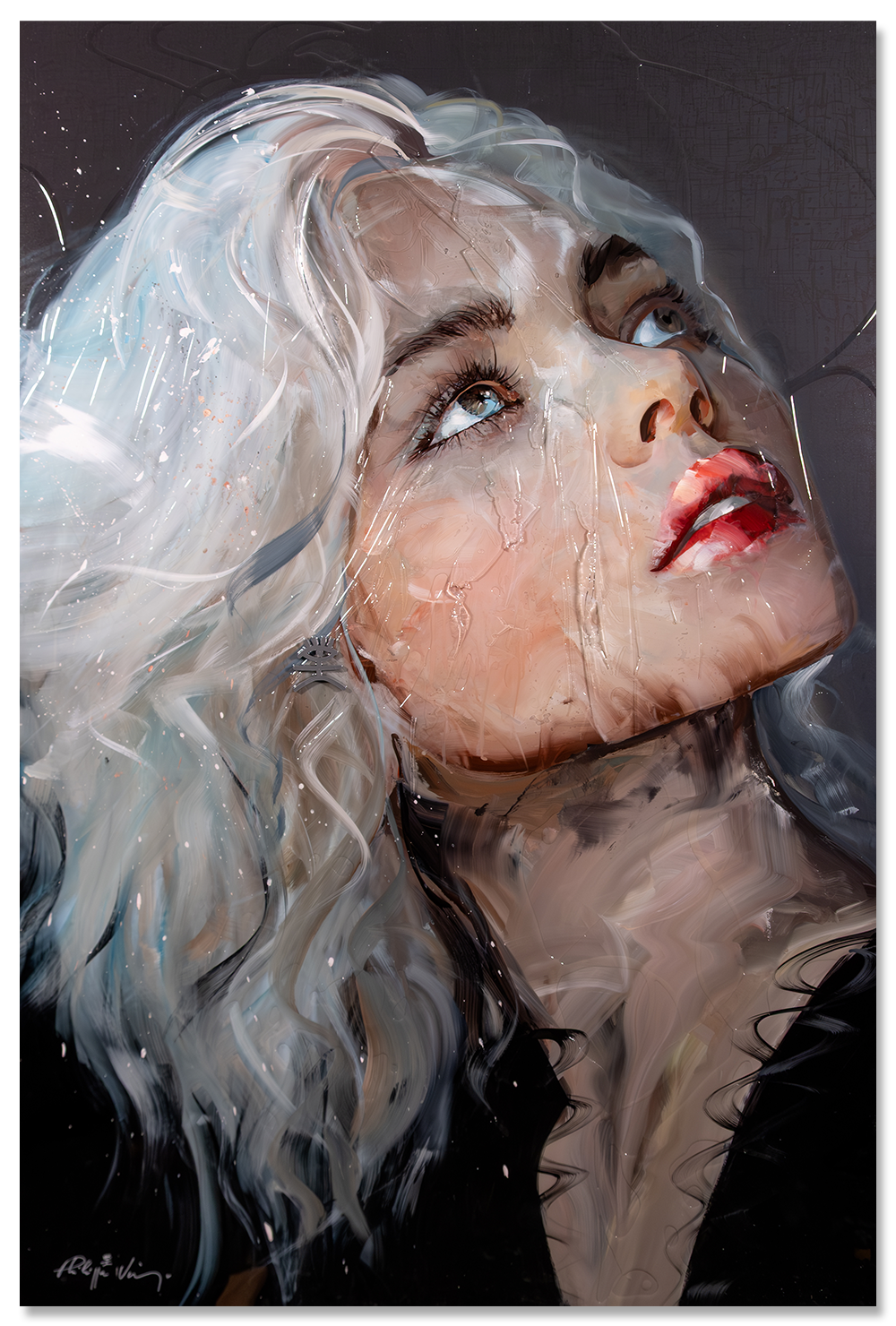
Philippe Viejo, Bodo, Mixed Media on Metal
Process & Discipline
EDEN: How do you know when a work is finished?
Philippe Viejo: When the resin has done its job. When the material reaches its depth and the light behaves as intended. Resin imposes its own rhythm, there is a dialogue between my hand and the material. The work is complete when that dialogue has said everything.
EDEN: How do you approach moments of doubt or creative block?
Philippe Viejo: I paint from memory, without photos or models. This frees me from technical judgment. There is no “wrong” when painting a universal face. My doubts are about meaning, not execution, and I found that meaning fully in 2016, when I embraced my identity as an artist without hesitation.
Emotion & Meaning
EDEN: What do you hope people feel when living with your work?
Philippe Viejo: A sense of belonging. That the viewer recognizes themselves in a face that is no one and could be everyone. The resin creates depth, almost a physical presence, so the painting becomes not something you observe, but something you inhabit.
EDEN: Is there a work that is particularly personal to you?
Philippe Viejo: LE DERNIER SOUPIR (The Last Breath), without hesitation. It carries the emotional weight of a family journey across the American continent, an encounter with a pizzly in Alaska, and the Mexico City earthquake where my family was separated for hours. That work is where everything finally came together, emotion, experience, and technique.
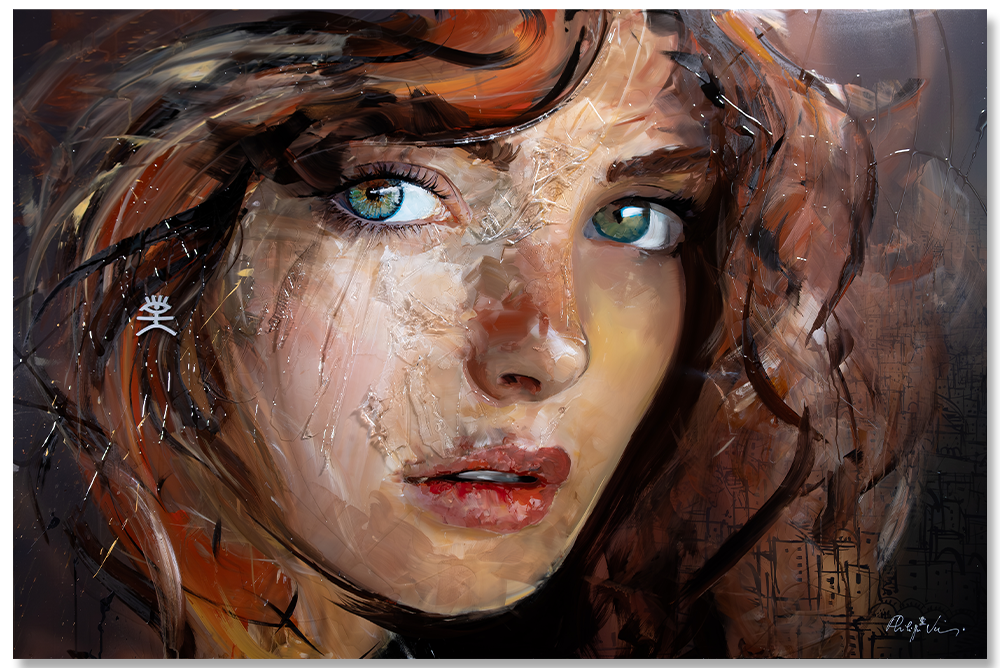
Philippe Viejo, Tralee, Mixed Media on Metal
Dialogue with the World
EDEN: Which artists have influenced your thinking the most?
Philippe Viejo: Pablo Picasso, first of all. Guernica is not just a masterpiece, it is an act. It proves that painting can scream what words cannot.
Frida Kahlo is also essential. Her relationship with pain and identity resonates deeply with me. Art, for both of us, is born from something visceral.
EDEN: Do you see your work as part of a movement?
Philippe Viejo: My technique is unclassifiable. It blends acrylic, resin, and metal. I belong to a contemporary art that embraces hybridity, but I remain independent. That is my freedom.
EDEN: What role does the artist have today?
Philippe Viejo: To remind us of what is essential. In a world full of boundaries, presenting a universal face and naming it after a city is a quiet but powerful gesture: we are alike.
The Collector’s Perspective
EDEN: Who do you imagine living with your work?
Philippe Viejo: Someone who loves others. Someone who has traveled, or dreams of it. Someone who understands that the city on the canvas is not a place, but a feeling.
EDEN: How do you perceive the relationship between artist and collector?
Philippe Viejo: As a transmission. The work leaves my studio and continues its life elsewhere. The collector becomes its guardian.
Signature
EDEN: What is the most surprising thing about you?
Philippe Viejo: That it took me fifty years to get here, and that everything was already present in the child who hid his canvases under the bed. It was never a detour. It was maturation.
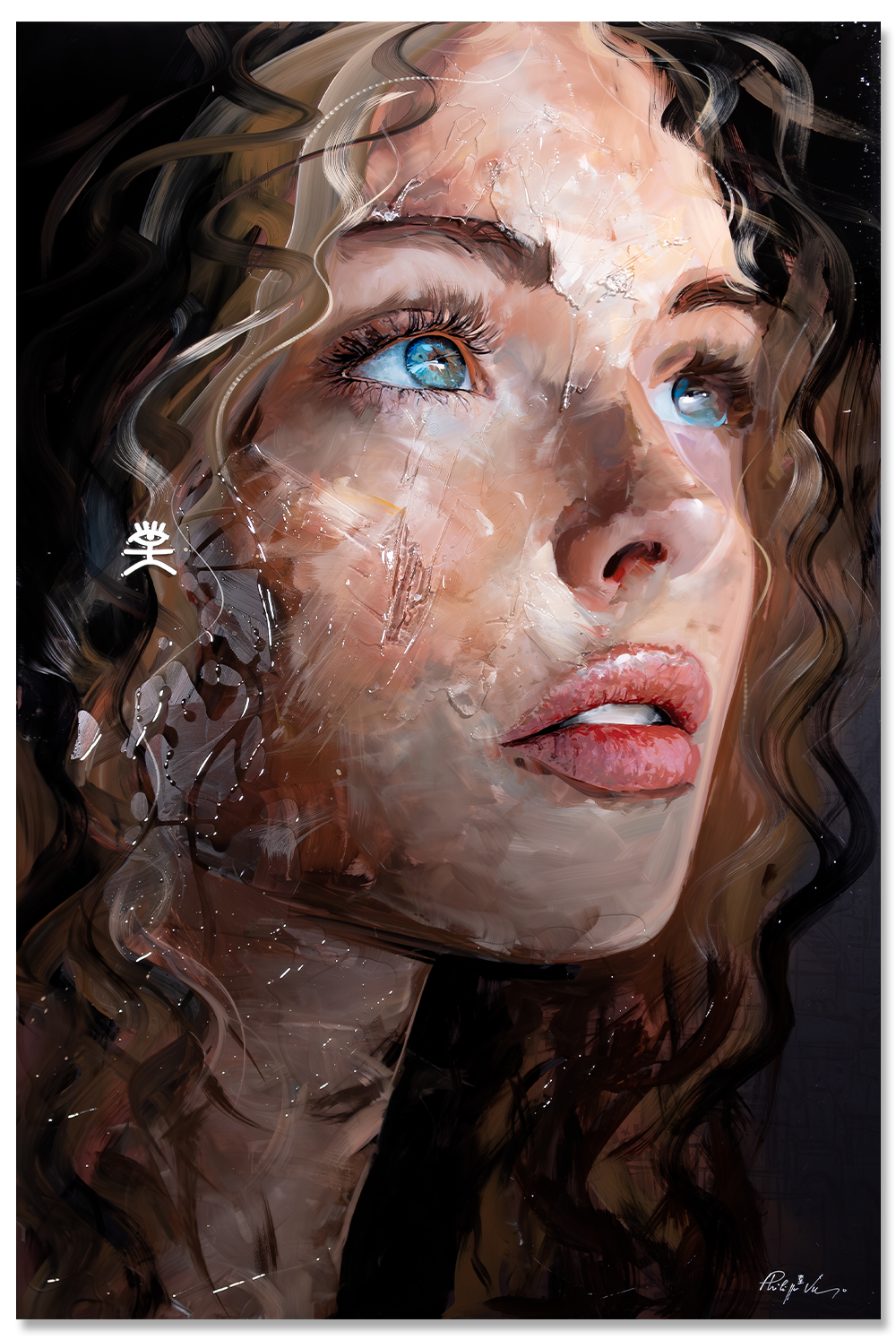
Philippe Viejo, Taos, Mixed Media on Metal