Perception Beyond the Senses - How we truly experience art, beauty, and the world around us. Written by Dame Evelyn Glennie CH
We often speak of seeing art, hearing music, tasting food, smelling flowers, or touching the world around us, as though our experience of life arrives neatly divided through the five senses. In my experience, perception is not simply sensing but an act of presence.
A painting can stop us in our tracks before we understand why. A piece of music can move us to tears without a single lyric explaining what we feel. A sculpture can hold a conversation with us across centuries. These encounters inform us that perception extends far beyond the mechanics of our senses. We do not experience the world solely through what we receive; we experience it through the quality of our attention.

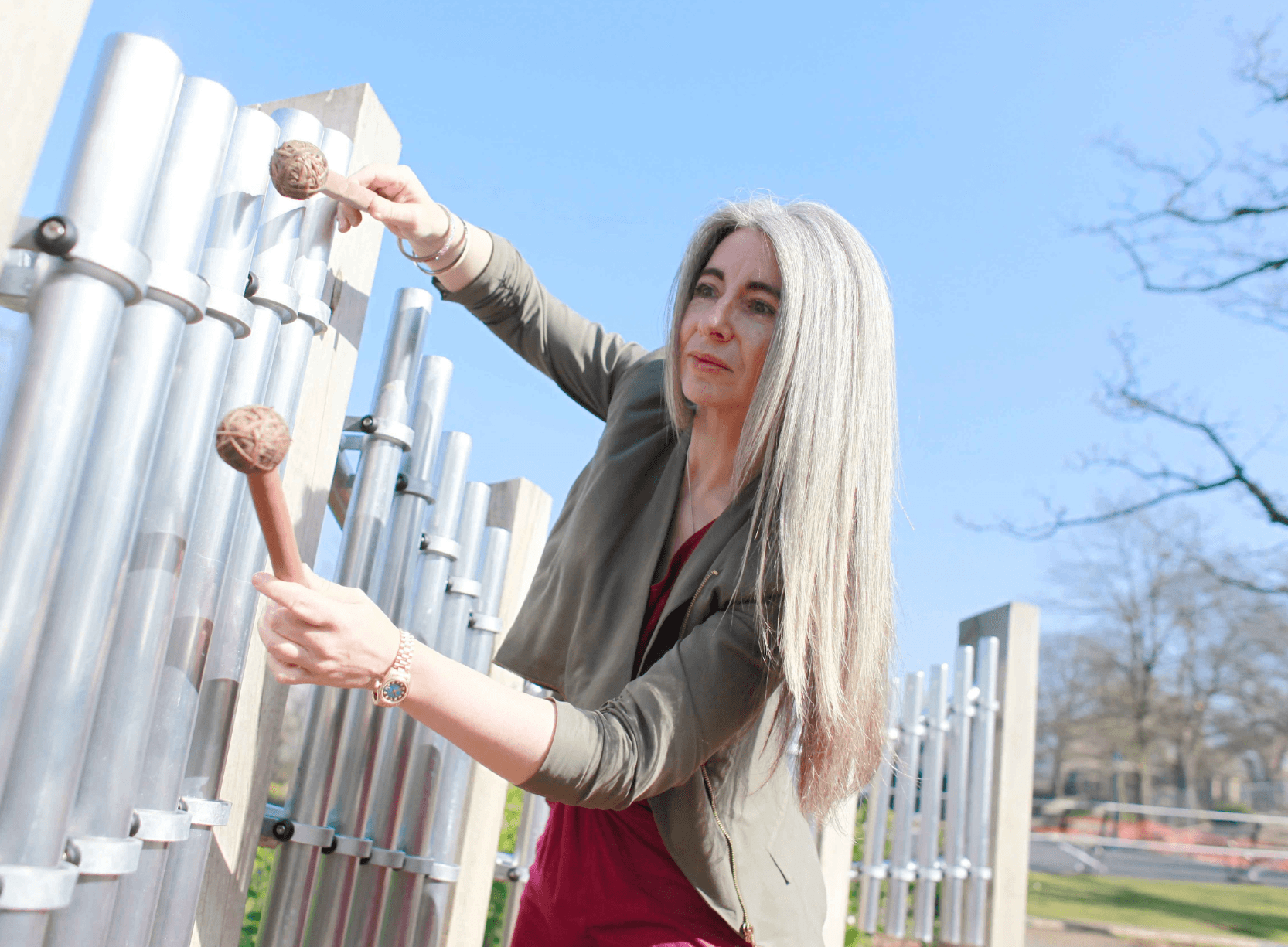
Photo by © Andy McCreeth
As a profoundly deaf person, I’m often asked how I could become a professional musician. This question assumes that music belongs exclusively to the ears. In reality, the ears are only one possible doorway. When I play, I’m not translating silence into sound - I’m receiving information through my entire body. My body becomes a huge ear. Different frequencies arrive in different ways. Vibrations travel through the floor, through the instrument and mallets, through the architecture of a space. A note is never just a note. It has weight, texture, shape, direction, colour and character. I don’t simply ‘play’ an instrument; I negotiate and converse with it. This happens from a clean slate every single time I’m in contact with an instrument because every surface, material and space responds differently. Music is not something that travels from performer to audience. It is a living exchange between bodies, objects, spaces and intention which is why every single piece of music is a world premiere, even if played hundreds of times. From my perspective, I’m curious why so many hearing people have been taught to experience music through such a narrow channel.

Notes Black by Calman Shemi
Deafness doesn’t remove information from my world, it redistributes it. It encourages me to notice details that are often overlooked. I’ve become aware that people frequently communicate their true feelings long before they speak. The rhythm of a person's movement, the way they occupy a room, the tension behind a gesture, the look in the eyes - these details can reveal more than words.
The same is true of art. We sometimes approach a work asking, "What does it mean?" I find myself asking, "How does it behave?" Does it pull me closer or push me away? Does it feel expansive or compressed? Restless or still? We move ourselves from translation to interpretation for which the relationship and experience with that piece becomes uniquely our own. Collectors often describe standing before a meaningful work and feeling something they cannot always easily explain. They may call it resonance, energy, memory or recognition. They’re describing a meeting point between the artwork and their own consciousness. A dialogue is taking place.
I sometimes wonder whether people who rely heavily on hearing miss more than they realise. Hearing is largely automatic whereas listening requires participation. We live surrounded by sound yet often absent from experience. There is an extraordinary amount of information contained in ‘silence’. Silence is not an empty space waiting to be filled. It’s where subtleties become visible. We notice the hesitation before an answer, the atmosphere of a room before a meeting begins, the emotional weight hidden between words. Many of the most important moments in life arrive quietly. We are often listening so hard for something dramatic that we miss what can be transformative.

Notebook by David Kracov
My understanding of beauty has also changed over time. Early in my career, beauty seemed connected to perfection: the flawless performance or perfect sound. Now, I believe beauty is presence. Some of the most beautiful moments I have experienced emerged from vulnerability, stillness or imperfection. Rhythm has taught me that beauty is found in relationship rather than regularity. Silence has revealed that beauty doesn’t need to boldly announce itself. Vibration informs me that beauty is often something we feel before we understand. A vibration disappears the instant it is created, yet while it exists it can transform an entire room. This to me is a profound description of life itself.
In a world increasingly defined by speed, distraction and constant stimulation, meaningful perception is becoming rarer. We’re encouraged to consume experiences rather than inhabit them, to react rather than receive.
If I could offer one practical suggestion for experiencing an artwork more deeply, it would be to remain with it longer than feels comfortable. Resist reading the label immediately. Resist the urge to photograph it. Notice your first reaction, then allow it to pass. Ask not what the artwork is saying, but what it is asking of you. The most rewarding encounters with art are rarely instantaneous. They unfold. Given enough time, you may discover that the artwork is not simply revealing itself to you - it is revealing something about you to yourself.
Perhaps this is the true purpose of art: not necessarily to show us something new, but to awaken a deeper way of experiencing. Hearing can be measured; listening cannot. Although I am deaf, my life is not defined by deafness. It is defined by listening. The richest experiences in life reveal themselves when we are present enough to receive them.

A L'ecoute Des Vibrations Profondes by Yoel Benharrouche
Dame Evelyn Glennie is the world’s premier solo percussionist. Her solo recordings exceed 40 CDs. A double GRAMMY award winner and BAFTA nominee, Evelyn composes for film, theatre and television. The Evelyn Glennie Podcast was launched in 2020. Evelyn was awarded an OBE in 1993 and has over 100 international awards to date, including the Polar Music Prize, the Léonie Sonning Music Prize and the Companion of Honour. Evelyn is Curator for The Evelyn Glennie Collection. Her iconic film Touch the Sound, TED Talk and charity The Evelyn Glennie Foundation embody her life-long mission to Teach the World to Listen
Source: https://www.evelyn.co.uk/about/