
Drawings are a type of fine and graphic art that differs from paintings in that they focus on the shape and form of the subject rather than the colors and gradients.
How to Store Drawings
Updated: March 19 2026
Comprehensive Guide to Storing Drawings
What is Drawing?
Before we get started on storage, what is drawing? Drawing is one of the most recognizable, common, and oldest forms of visual art. Drawing, or illustration, describes the act in which an artist will use instruments, such as a pen or pencil, to mark paper or another two-dimensional surface.
How Do Artists Store Their Drawings?
Artists use different methods for drawing, such as graphite, chalk, charcoal, pastels, crayons, etc. All these methods use different mediums, and because of this, the storage of different types of drawing can differ. To make it easier for you, we have a comprehensive guide on how to store your drawings.
Materials Required for Storage
Acid-free tapes
Frames
Matting materials
Portfolio with acid-free plastic
Fixative or varnish
Clamshell boxes
Glassine
Acid-free lining papers
What Is the Best Way to Store Drawings?
The exact method for storing a drawing will depend on the mediums used to create the artwork. A drawing can be created with more than just a pencil, making some drawings more fragile than others.
For Charcoal Based Drawings
Charcoal is a popular drawing medium, but anyone who has worked with charcoal knows it smudges easily. Before storing charcoal drawings, you can use fixative sprays to help limit smudging.
It’s a wise idea for artists to spray their charcoal drawings with fixative spray before attempting to store or transport them. Make sure to spray multiple feathery coats; this method also prevents the pictures from collecting dust. Once the fixative is applied and fully dry, you can pack the drawings. Line the charcoal drawings with glassine or acid-free paper, as the regular paper will yellow the drawing.
It is better to use glassine in comparison to acid-free lining paper because glassine is more smudge-proof. Store the picture in clamshell boxes that are specifically made for archival purposes and are acid-free.
For Graphite Drawings
Matting graphite drawings can help with storage, so pencil or graphite drawings need to be fixed by a workable fixative. This means that the fixative should allow the addition of layers of graphite after the spray has been done. Make sure to spray only a light coat of fixative on the paintings; this helps prevent smudging and dust collection.
Once the fixative is fully dry, you can line the graphite drawings with glassine and keep them in portfolios made explicitly for archival purposes with non-acidic plastic covering as the normal ones can yellow the drawing.
For Color Pencil Work
Like graphite drawings, you need first to fix a color pencil drawing with a varnish or fixture. This method will even help make the colors pop and help avoid the usual smudging while providing dust protection. Line the drawings with glassine, and you can store them by matting them and framing or storing them in a portfolio.
Special Precautions and Guidance
Ordinary lining papers are acidic and, over time, turn the drawings yellowish or ashy. Therefore it’s better to avoid them.
Please don’t use a cardboard box to store drawings as it could contain acid and ruin the pictures.
While using fixatives or varnish, make sure to spray them in an area that is well ventilated.
Keep the fixatives and varnish sprays away from the reach of children and fire.
Buy portfolios that are specifically made for archival purposes.
Make sure to line the drawings with glassine.
For framing the drawings, always mat them first.
For storing the framed pieces, make sure to use foamy material to protect the frame and line it with bubble wrap.
Place the drawings in low humid and dry areas to prevent damage.
Always add non-acidic lining while placing a drawing over another.
How to Store Drawings at Home
Storing your drawings at home can be difficult if you don’t have good storage space. Try finding a room in your house with a moderate temperature year-round and low humidity – avoid basements.
Then, lay your drawings on acid-free boards and store them lying on top of a flat surface. Cover your pictures with a clean cloth to keep dust and dirt off them. If the drawings are going to be stored long-term, you should consider airing them annually to prevent humidity from building up.
How to Store Big Drawings
Large drawings can be inconvenient to store due to their size. It is tempting to roll large drawings to make storage more manageable and the drawing more compact. However, rolling is not recommended for long-term storage and certainly not recommended for storage of pastel drawings or smudging materials.
Attempting to flatten a drawing again after it has been rolled up can cause long-term damage. Wherever possible, store large pictures flat as you would any other drawing.
How to Store Loose Drawings
If you have many small loose drawings or sketches, it’s often easiest to store them in a portfolio or folder. You should choose an art folder with no acidic plastic sleeves and put only one drawing in each sleeve to avoid transfer or smudging.
Storing Fine Art
We hope this guide helps you in storing your precious drawings. You can learn more about how to store art on our blog. Follow these methods to ensure your drawings stay in mint condition. If you’re looking to buy original artworks you can be confident you know how to store them correctly.
Learn more about storing canvas paintings.
RELATED ARTICLES
EDEN
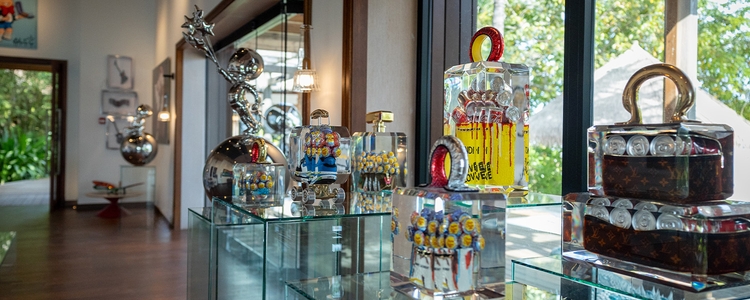
Updated: March 31, 2026Alchemy of the Ordinary: Transforming Everyday Objects into Masterpieces
Art has a remarkable ability to elevate the mundane, turning everyday objects into extraordinary expressions of creativity. Throughout history, artists have reimagined the ordinary, using it to challenge perceptions, inspire wonder, and reshape our ...
EDEN
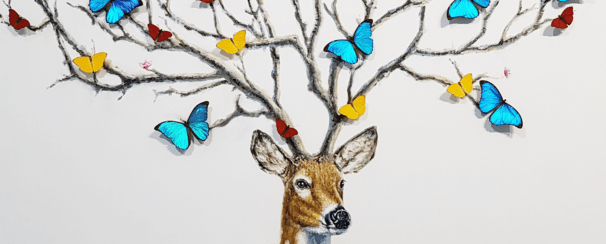
Updated: March 25, 2026What Is Drawing?
Drawing is one of the most commonly recognized forms of visual art. Drawings are created by an artist using instruments to create lines on paper or another two-dimensional surface.
EDEN
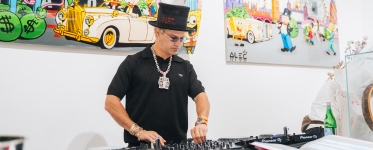
Updated: June 03, 2026Alec Monopoly's Exhibitions
EDEN, The House of Art, presents a series of exclusive Art Nights with Alec Monopoly in Miami and New York. Showcasing his latest works, including the bold Flying to a Happy Place series, these immersive evenings bring together art, music, and atmosphere ...
Show more