
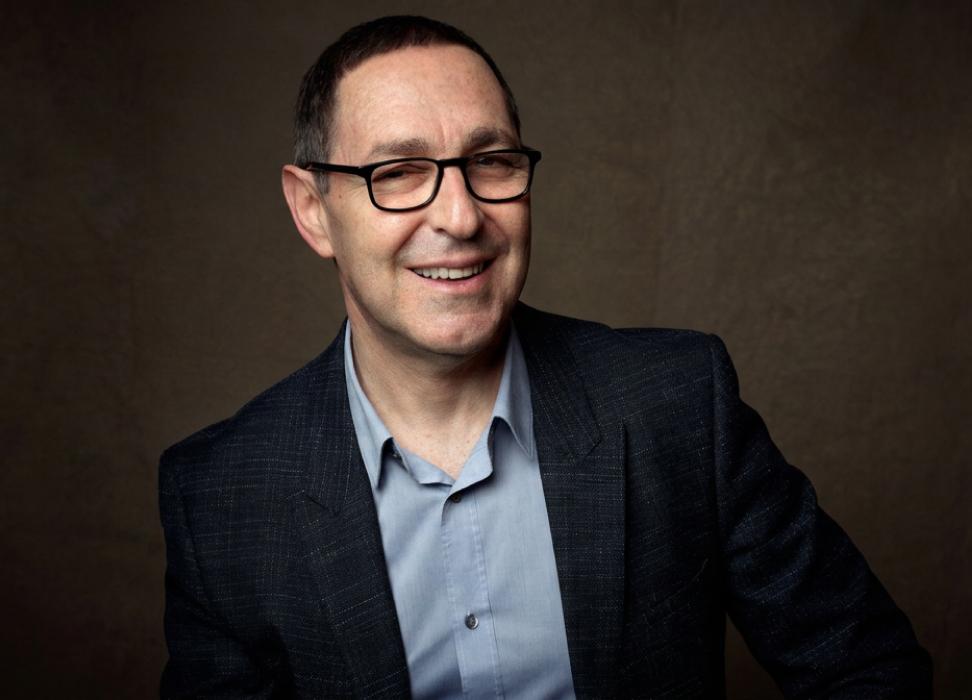
Longevity is often presented as a collection of supplements, technologies and carefully optimized routines. For Dr. Frank Lipman, a renowned pioneer in integrative and functional medicine and the best-selling author of several books on health and longevity, living well begins with something deeper: how we sleep, move, think, connect and find meaning in our lives. Over four decades, Dr. Lipman has developed an approach to health that brings together the strengths of modern medicine with a more holistic understanding of the body, mind and environment. In this edition of EDEN’s Expert Series, he reflects on the habits that have the greatest influence on aging, the importance of maintaining a curious and creative mind, and the role that art can play in calming the nervous system and bringing us into the present moment. He also considers what money can and cannot provide, how our homes can support a sense of well-being, and why vitality is not simply about adding years to life, but about remaining independent, engaged and capable of doing what matters most.
Living Longer, Living Better
1. You have spent four decades emphasizing that longevity is not found in a single supplement, but in a way of living. Of the habits in your Longevity Pyramid, which do people underestimate most, and which one has the greatest ripple effect?
Sleep is probably the most important habit people do not take seriously enough. Many people do not realize what happens while we sleep. It is the body’s primary time for repair.
People also tend to exercise incorrectly, particularly as they get older. Too many neglect resistance or weight training, even though we begin losing muscle from around the age of 35. You can run marathons and do as much aerobic exercise as you like, but without strength training, you are still going to lose muscle. Muscle is one of our most important longevity organs.
If I had to choose the habit that affects everything else, it would be exercise. It influences almost all of what we call the hallmarks of aging, the biochemical changes that take place as we grow older.
I would place purpose alongside it. Having meaning in your life and doing something you love are equally foundational. For me, purpose and exercise are the two essential pillars.

2. Brain health has become a central focus of your work. Beyond preventing cognitive decline, what does a sharp and well-supported mind allow us to experience as we age?
There is an enjoyment of life that comes with it. A sharp mind allows you to remain more independent as you get older. It helps you stay curious, engaged and interested, including in art, for instance.
It allows you to remain creative, imagine new things, solve problems and continue contributing to society. It gives you the clarity and energy to pursue what is important to you.
It also allows you to adapt, connect with others and have meaningful conversations. Ultimately, it helps you continue functioning at the level you want as you age, at a time when many people unfortunately begin losing those abilities.

3. You trained in conventional medicine before expanding your practice to include integrative approaches. What prompted that evolution, and what did it teach you about questioning established systems?
I never thought of it as having the courage to change. I simply saw something that I believed was not working and began exploring other approaches that could add to what I had already learned.
Whether it was Chinese medicine, herbal medicine or something else, I never viewed it as an either-or decision. Western medicine is excellent for acute and crisis care. If you break a bone or need surgery, it is incredibly effective.
But I recognized its limitations early on. It did not address chronic conditions or many of the everyday issues my patients were experiencing particularly well. For me, the question became: how can I incorporate other modalities into my existing knowledge to help the people I am treating?
Growing up in South Africa, I knew that political systems could be deeply flawed. As a result, I did not automatically trust established systems, including the medical system. Questioning them felt like a natural extension of who I was and how I understood the world.

Beauty, Perception & the Collector’s Eye
4. Many of your patients are culturally engaged people, including artists, collectors and creative professionals. Do you notice a difference in how they approach aging?
What I have noticed more than anything is that people who have purpose or meaning in their lives tend to age better.
Many of the creative people I see possess that sense of purpose. They are not simply doing something to make money. Their work gives them meaning, which I believe is one of the most important things we can have as we age.
Generally, the creative people I encounter seem to have a stronger sense of meaning and purpose than many others.

5. Collectors often describe falling in love with an artwork as a physical experience: a change in breathing, a tightening in the chest or an immediate emotional response. What is happening in the body in that moment, and can living with art help regulate the nervous system?
Being an artist, or becoming deeply immersed in art or another activity you love, can help calm the nervous system.
People who can step outside their thoughts and enter the present moment, whether by creating art or appreciating it, are practicing a form of meditation. Many people do not know how to calm their nervous systems, so those who regularly engage with art may have an advantage in that respect.
The physical response collectors describe is real. The brain sends messages to the body, creating a genuine physiological effect.
Consider meditation: you can physically be at the beach, or you can imagine yourself there, and the body may enter a similar state. Perception and imagination can both create a physical experience.
Different people are moved by different things. I am more affected by music, while my wife, who is a ceramic artist, is more deeply moved by visual art.

6. You have said that vitality is about adding life to years, not simply years to life. What does vitality make possible in everyday life that people often take for granted?
For me, vitality means being able to do the things I want to do.
I have a grandchild, and I am able to play soccer with him, wrestle with him and participate in physical activities. If I were older and more fragile, I might not be able to do those things.
I can also engage with him mentally and emotionally, be creative with him, feel confident in my body and continue adapting and learning alongside him.
That is vitality to me: being able to connect with him in ways that might not be possible if I did not maintain my physical and mental health.
Time, Aging & What We Choose to Surround Ourselves With
7. You have called for an approach to longevity medicine that blends art with science. What does the “art” of medicine mean to you in practice?
There is a science of medicine, but there is also an art to it.
For me, the art of medicine is the ability to understand the person sitting in front of you and adjust your recommendations, as well as the way you communicate them, accordingly.
It means making someone feel comfortable in your presence, listening carefully and building trust. It also means tailoring your advice to what that individual is genuinely prepared to do or change.
That emotional intelligence, and the ability to work with each patient as an individual, is what I mean when I speak about the art of medicine.
8. Some of your patients have access to the best food, technology and environments available. What can money support when it comes to longevity, and what can it never replace?
Money is never going to buy happiness. It also cannot buy what I consider the most important foundations of staying healthy and vital as we age: purpose and meaning.
Money can buy the extras: a sauna, a cold plunge or as many advanced treatments as you want. But those things are the cherries on top. They are not the foundation.
When you look at cultures and communities where people tend to age well, the common factors are not necessarily wealth. They are connection to community and environment, a sense of meaning, daily movement and good sleep.
Money can provide access to additional tools, but those tools are not essential. In fact, I often see people with substantial resources believing they can purchase their way to good health. Ultimately, that is not possible.
9. If you were designing an ideal home for someone who wanted to age well, what role would light, space, art and personal objects play?
The answer would be different for everyone. What matters is creating a space where you feel at home, where you can relax and where you enjoy what surrounds you.
I have a photograph above my computer of my grandson and me playing music together. He was around two years old, playing a small saxophone while I played the trumpet.
Anything that makes you happy and helps you feel positive about life belongs in your environment. If there is a painting you love that creates that feeling, that is meaningful. Color can also have an effect.
The ideal environment will be different for every person, but it should make you feel safe, comfortable and happy.
10. What is the one thing you understand at 70 about how to live that you wish someone had told you at 40?
At 40, I was less wise and more dogmatic. I was more opposed to Western medicine and believed too many medications were harmful.
Today, I am much more open to using whatever works. In those earlier years, I was fighting against the system. I was less comfortable with myself and was constantly trying to prove a point or establish my own path.
Thirty years later, I am more comfortable with who I am and what I do. I do not worry as much about what other people say.
As you get older, you become more comfortable with yourself and stop trying to prove everything. Life becomes easier once you are no longer constantly fighting to define your place.
In the early days, I was a rebel. Now, I am a guru. A rebel can be more dogmatic and angrier at a system that is not necessarily entirely bad.
As you age, you soften. You become more secure in your beliefs and more willing to acknowledge that you may have been wrong, or that things are not always as black and white as they once appeared.
Interview conducted for EDEN’s Expert Series.