
Discover Diego Benéitez’s artistic world in an intimate conversation with EDEN, exploring his enduring connection to landscape, the role of light and memory in his work, and his desire to leave each painting open to personal interpretation.
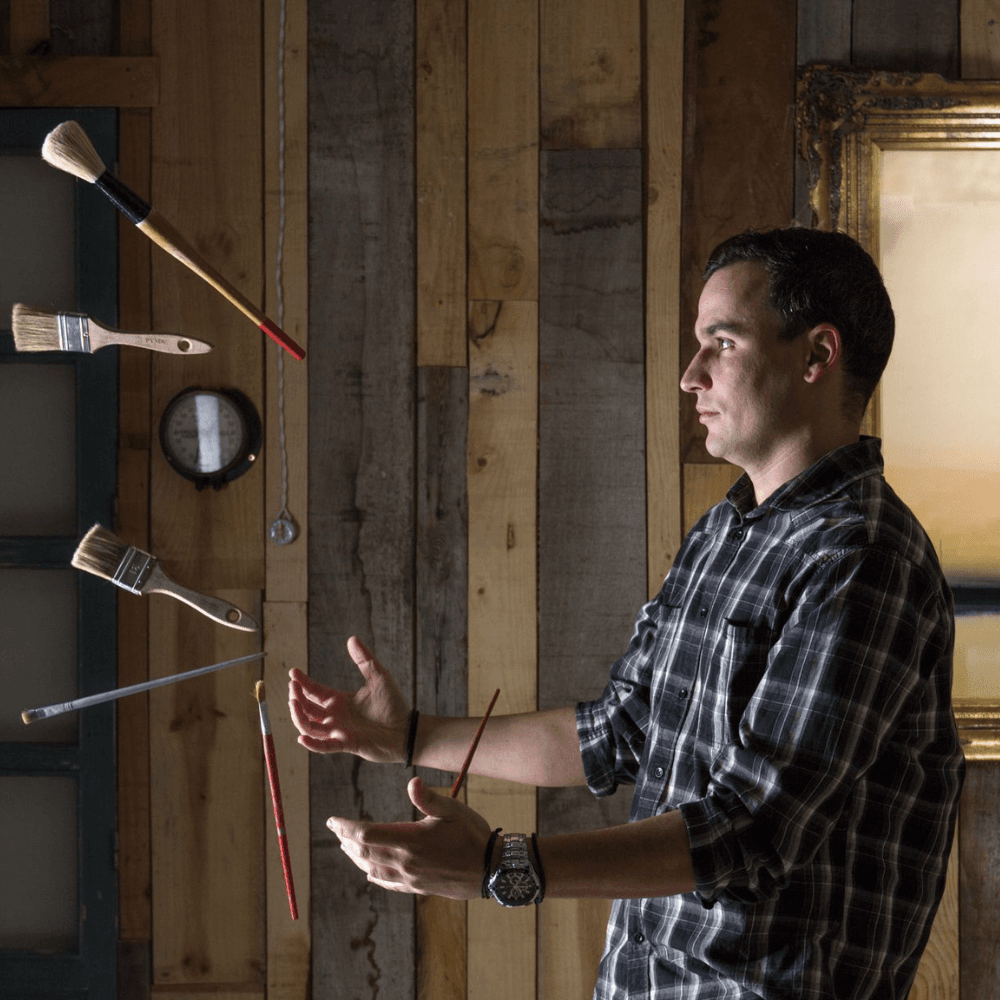
Diego Benéitez: Where Landscape Becomes Memory
Updated: September 15 2026
Diego Benéitez (b. 1986) is a visual artist whose story begins on the streets, among friendships and large walls. Rooted in the tradition of urban art and graffiti, he has built over the years a language of his own centered on landscape as a space for reflection and identity. His work — deeply personal and honest — is in dialogue with light, memory, and the places that define us. Influenced by figures such as Rothko and Turner, Diego works from lived experience and emotion, seeking to make each piece an open window for whoever stands before it.
I. ORIGINS
EDEN: Where does your story as an artist begin?
Diego Benéitez: My beginnings are rooted in urban art and graffiti. It was a mix of artistic friendships and the solitude of large walls.
EDEN: Was there a moment when you knew art would be central to your life?
Diego Benéitez: Art has been part of my life since I was a child. It was the only thing that truly called to me — what made me want to discover and learn. I believe we are who we are because of everything we have been before. That idea has always stayed with me.

II. LANGUAGE AND IDENTITY
EDEN: What themes or ideas do you keep returning to?
Diego Benéitez: The landscape is my central reference — where I put my greatest effort and dedication. That image, that place, that quietly asks us every day who we are.

Diego Beneitez, El Inicio del Dia, Original Acrylic Painting on Canvas
III. PROCESS AND DISCIPLINE
EDEN: How do you know when a piece is finished?
Diego Benéitez: When the creative process stops on its own.
EDEN: How do you handle doubt or creative blocks?
Diego Benéitez: I believe doubt is part of the work, part of the creative process. It's what drives you to where you want to go. It would be very hard to live — and to create — in a world without doubt, wouldn't it?
IV. EMOTION AND MEANING
EDEN: What should someone feel living with your work?
Diego Benéitez: I want the experience to be as personal as possible. I don't want to frame anything. I leave everything open so that each person can interpret what they see through their own memories and lived moments.
EDEN: Is there a piece that feels especially personal to you?
Diego Benéitez: More than a single piece, a series: the skylines and the bays. They are a part of me — part of my history, part of my most intimate self.

Diego Beneitez, El Futuro son sus Ojos, Original Acrylic Painting on Canvas
V. DIALOGUE WITH THE WORLD
EDEN: What artists have influenced you the most?
Diego Benéitez: Rothko's concept is something that has always been with me. I'm also inspired by artists who captured light masterfully — Turner above all — from the classical landscape painters to the most contemporary ones.
EDEN: Do you see your work tied to a movement, culture, or moment?
Diego Benéitez: We always create within our time, and everything is inevitably connected to something. But I tend toward the personal, the lived, the felt. What moves and excites me. An honest painting is what I strive to make.
EDEN: What is the role of an artist today?
Diego Benéitez: I believe artists are often a clear reflection of our society. Through music, film, or painting — in a biographical or autobiographical way — we develop and act in this world. We are witnesses, and at the same time, part of it.
VI. THE COLLECTOR'S PERSPECTIVE
EDEN: Who do you imagine living with your work?
Diego Benéitez: Anyone who wants to open a window — a new space in their life. A place to look at, and above all, a place to see themselves.
EDEN: How do you see the relationship between artist and collector?
Diego Benéitez: As something essential. Today's collectors are increasingly sharp — they follow their heart, but also their investment instinct. I think that gives the work more weight and more value at the same time.
VII. SIGNATURE
EDEN: What's something people would be surprised to learn about you?
Diego Benéitez: Probably several things. That I got my start through graffiti. That I paint the sea in almost all of my work, despite never having lived near it. And that when people see my pieces, they often think I'm older than I actually am.

Diego Beneitez, Memoria y Gratitud, Original Acrylic Painting on Canvas